[{“id”:”37c74fe5″,”elType”:”container”,”settings”:{“min_height”:{“unit”:”px”,”size”:0,”sizes”:[]},”background_background”:”classic”,”background_image”:{“id”:292,”url”:”https://machinepu.com/wp-content
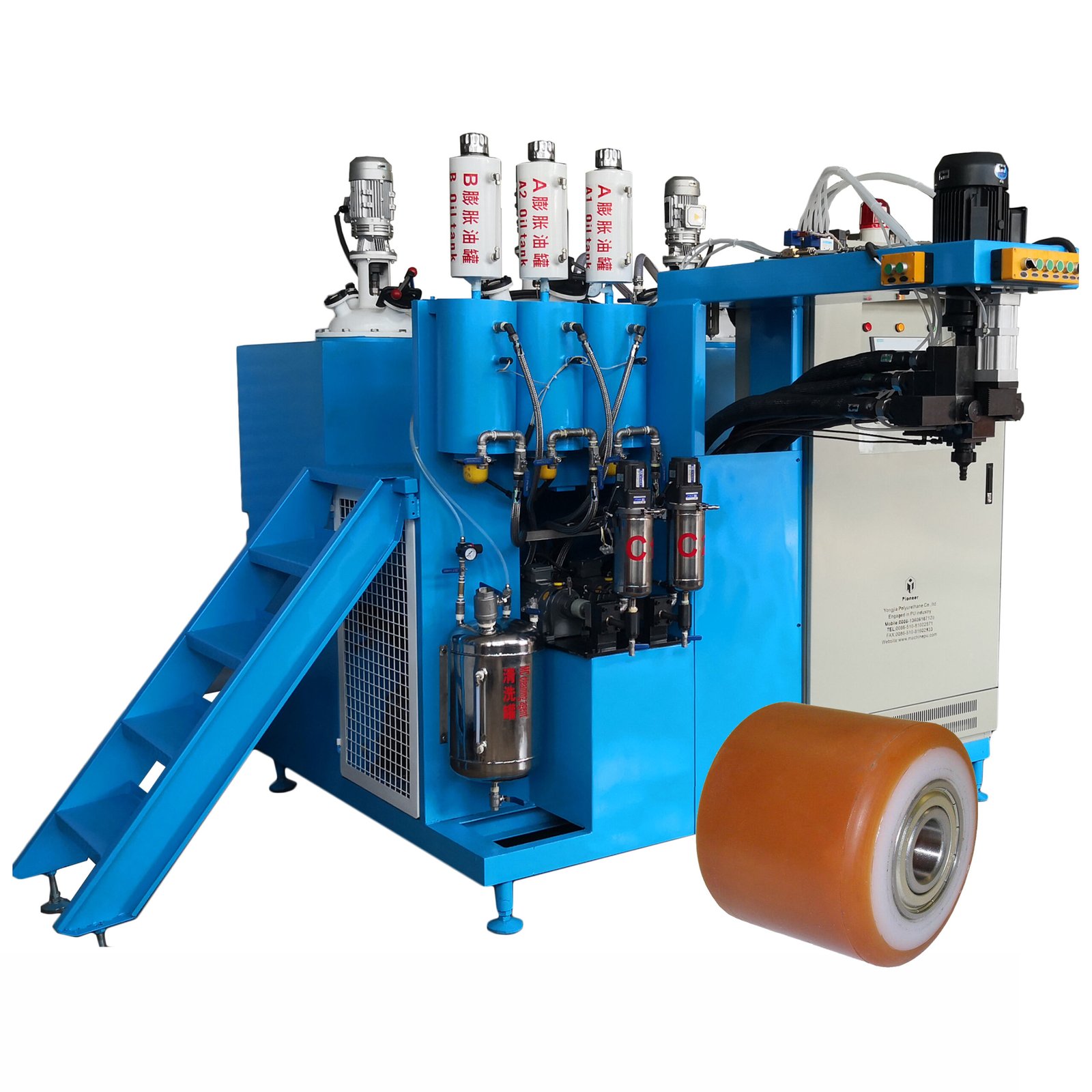
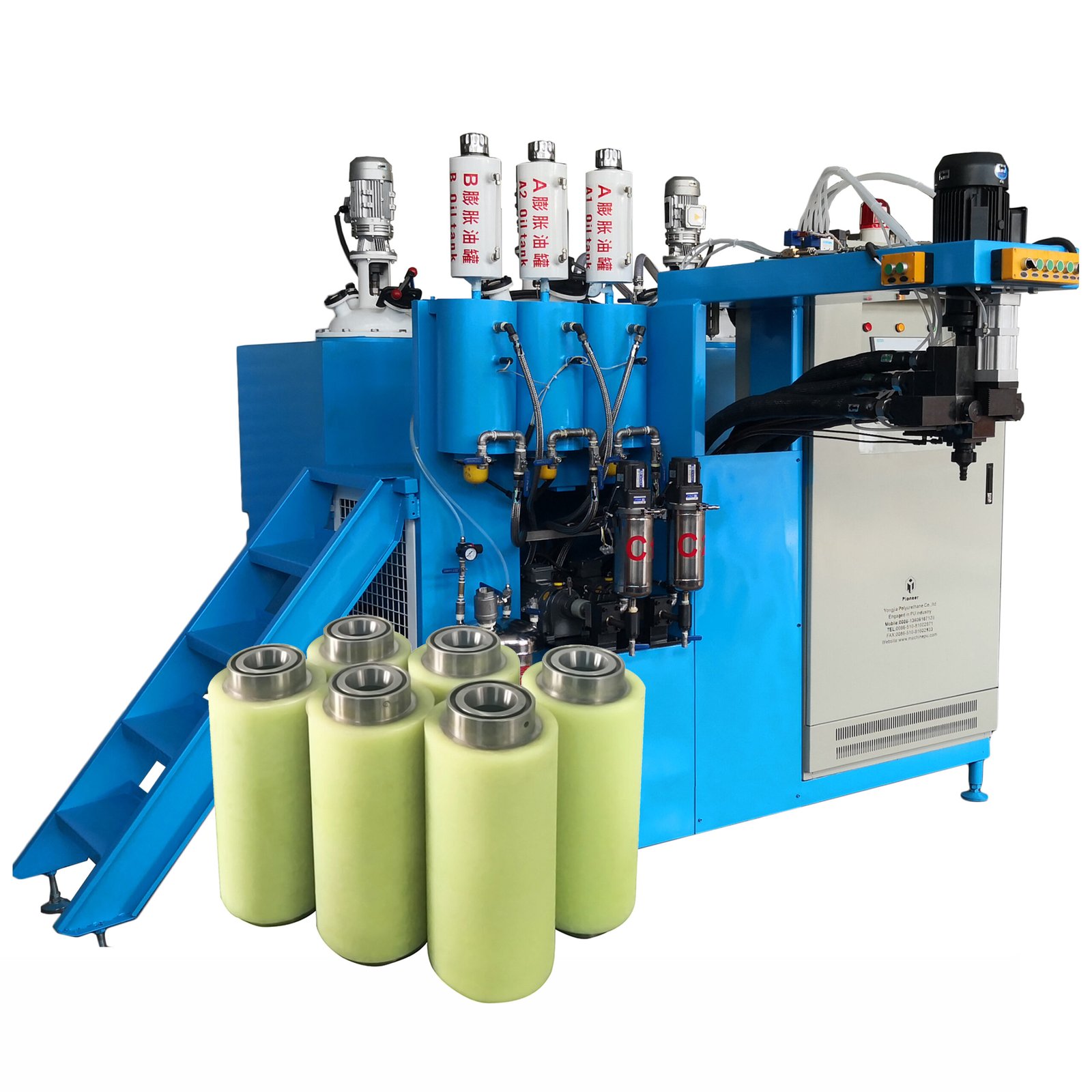
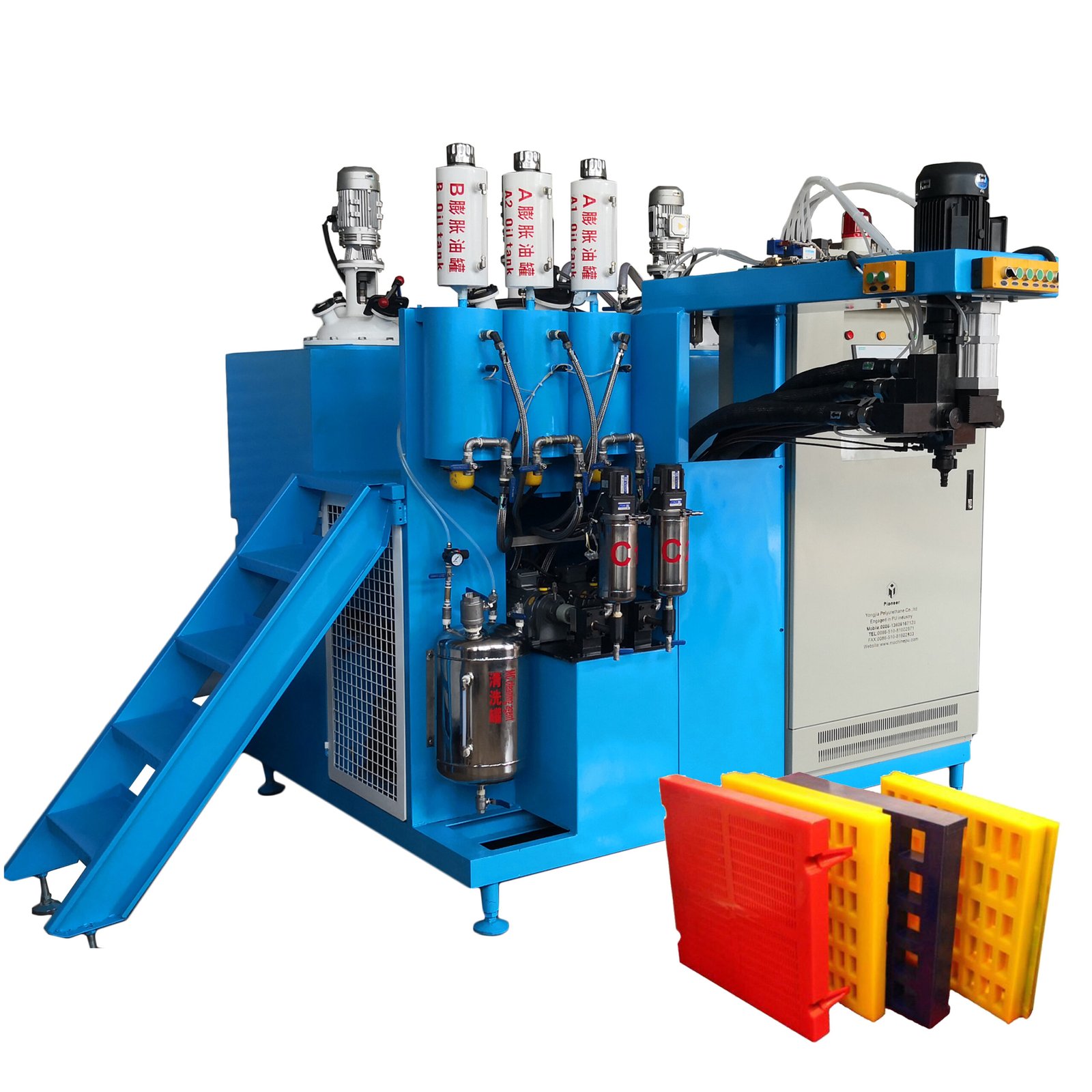
Elastomer casting is the process of mixing a two-component polyurethane system (polyol plus MDI or TDI isocyanate) at a precise ratio and pouring it into a mould, where it cures into a solid elastomer part such as a wheel, roller, screen panel or scraper.
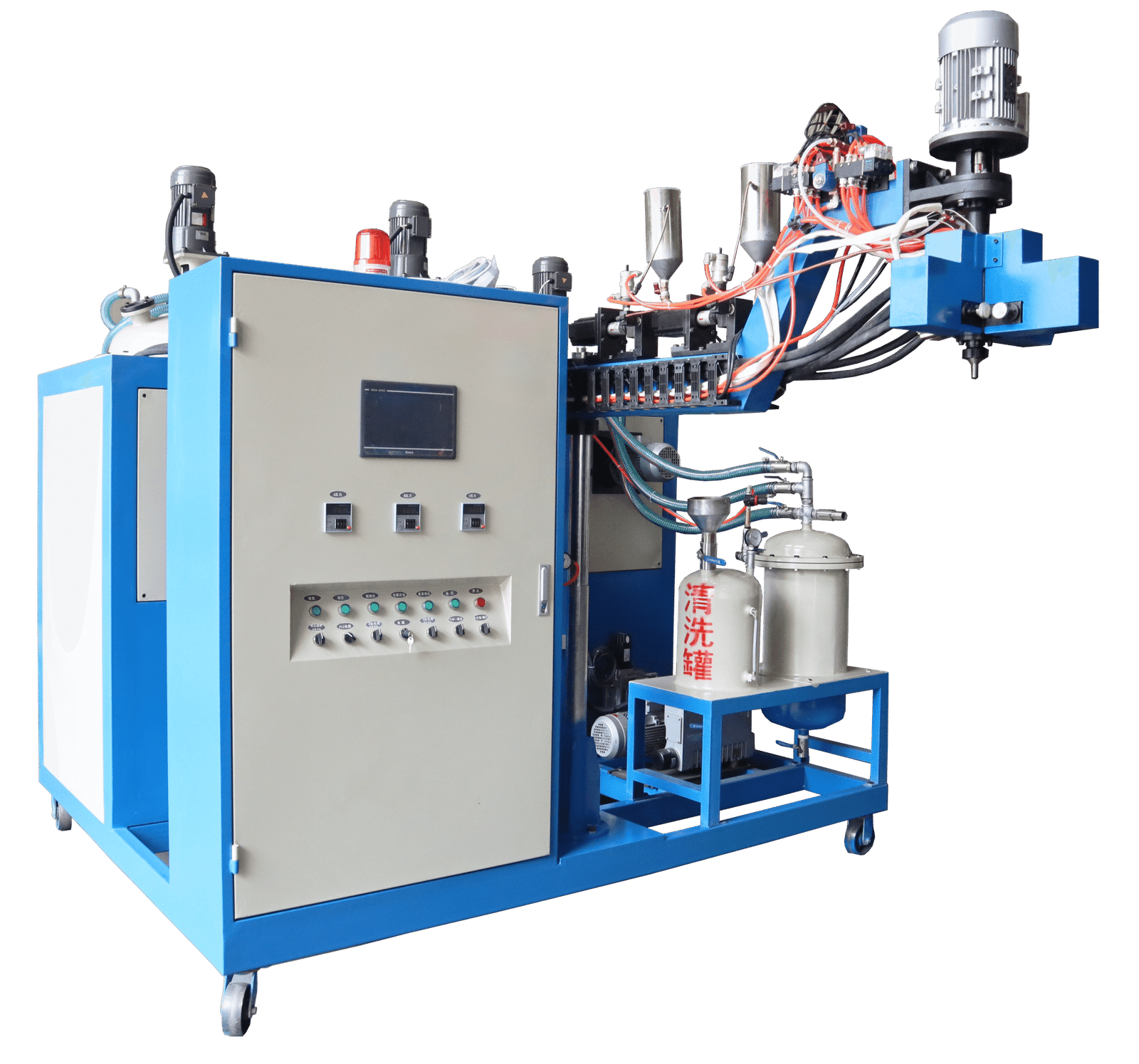
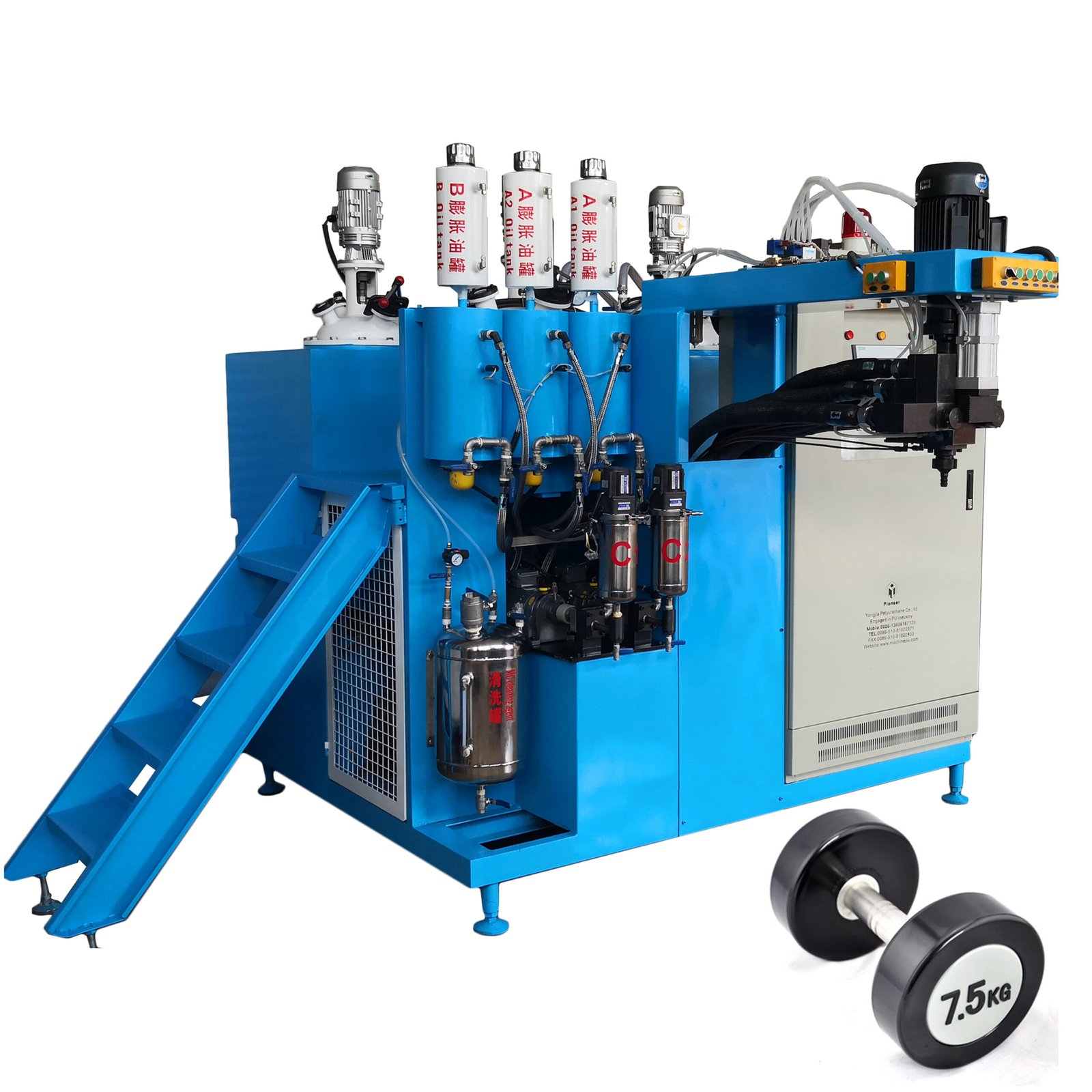
PU Elastomer Casting Machine
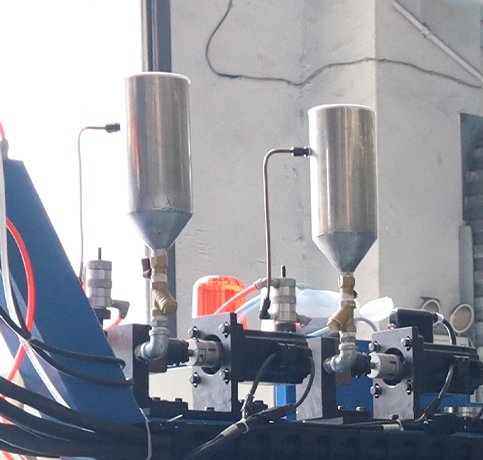
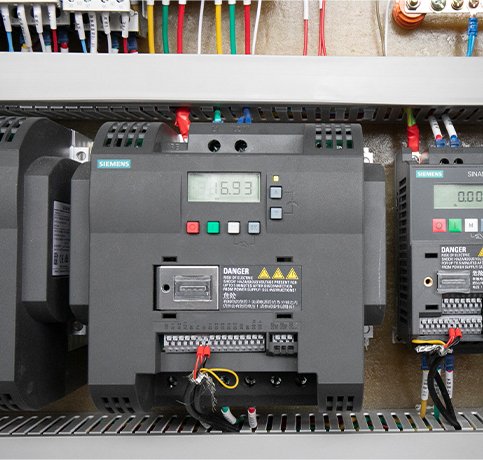
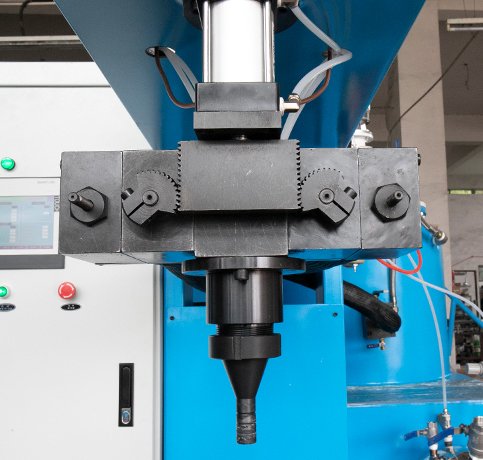
Yongjia elastomer machines support both MDI and TDI systems and have strong temperature and pressure control capabilities, ensuring stable product performance in hardness, wear resistance, and elasticity. They are widely used in wheels, rubber rollers, seals, industrial accessories, and other fields.
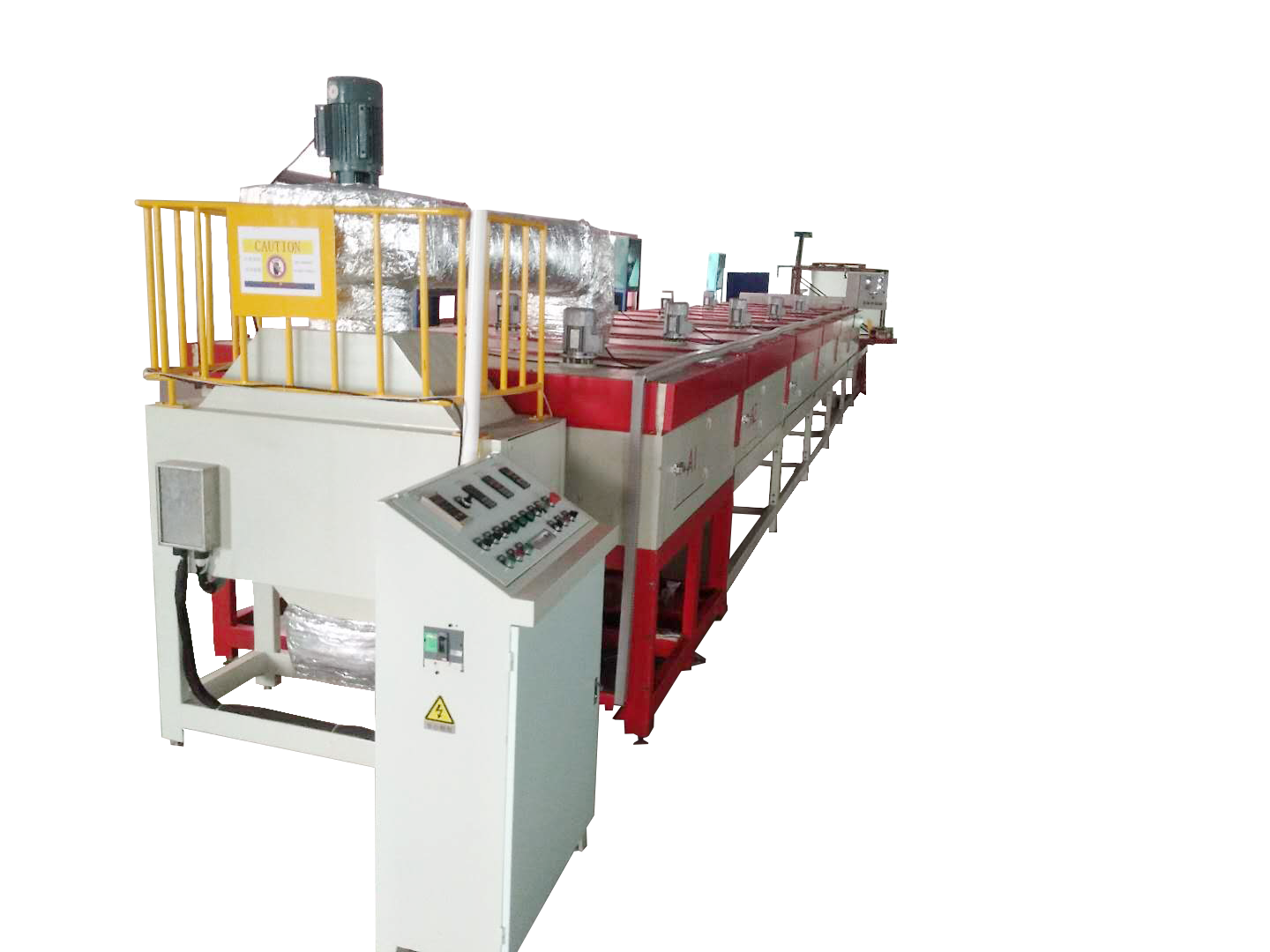
Elastomer Production Line
Yongjia’s elastomer oven production line integrates a fully automated mold conveying and oven curing system with an elastomer machine, achieving integrated production from raw material metering, mixing, pouring, and curing. It supports both MDI and TDI systems, ensuring fully cured products with stable performance. The entire line boasts a high degree of automation, making it suitable for large-scale industrial production.
The Casting Process
Prime the metal core or insert → condition mould and materials to temperature → meter, mix and pour at the fixed ratio (fill from the bottom to avoid air) → gel and demould → post-cure to develop final properties → machine to final size. Ratio drift and trapped air are the two most common causes of soft spots and early failure.
How to Choose a PU Elastomer Casting Machine
A PU elastomer casting machine meters and mixes a two-component polyurethane system and pours it into moulds to make solid, dense cast parts — wheels, rollers, mine screens, scrapers, bushes and more. We build the machine; you run it with your own or sourced MDI/TDI system. Five things decide the right machine:
- Shot capacity vs part volume — large parts (screen panels) must fill in one shot before gel; this sizes the machine.
- MDI or TDI system — TDI for abrasion/dynamic parts (screens, scrapers, wheels), MDI for easier handling and firmer parts. Multi-component machines run both.
- Ratio and temperature control — accurate ratio (±1%) and heated tanks drive consistent hardness part to part.
- Component count — 2/3-component machines let you adjust hardness or colour in-line.
- Automation — mould carousels and metered pouring for volume production.
Key Parameters
| Parameter |
Typical range / note |
| Hardness |
Shore A 60–95 (up to Shore D for MDI structural parts) |
| Mixing ratio accuracy |
±1% — the driver of consistent hardness |
| Material temperature |
Heated tanks, held stable for constant viscosity/reactivity |
| System |
MDI or TDI cast elastomer (2/3/multi-component) |
| Post-cure |
Oven cure to reach full abrasion, tear and rebound properties |
Application Guides — How to Make Each Part
Planning the complete cell rather than one machine? Read our cast elastomer machinery guide for metering, mould, curing-oven and automation decisions.
Tell us your part, hardness and output — we will propose the right PU elastomer casting machine and quote.
Technical Parameters — PU Elastomer Casting Machine
| Type |
SPU-E-05 |
SPU-E-09 |
SPU-E-2 |
SPU-E-3 |
SPU-E-4 |
SPU-E-8 |
SPU-E-10 |
SPU-E-15 |
SPU-E-22 |
SPU-E-33 |
| Flow Range (kg/min) |
0.14-0.5 |
0.3-0.9 |
0.5-2 |
1-3 |
1.5-4 |
3-8 |
4-10 |
5-15 |
10-22 |
15-33 |
| Material Tank |
60L / 10L |
80L / 10L |
120L / 20L |
120L / 20L |
160L / 30L |
260L / 50L |
260L / 50L |
260L / 50L |
300L / 80L |
500L / 120L |
| Mixing Head |
28# |
28# |
32# |
32# |
40# |
60# |
60# |
60# |
80# |
80# |
| Thermocouple |
Pt100 |
Pt100 |
Pt100 |
Pt100 |
Pt100 |
Pt100 |
Pt100 |
Pt100 |
Pt100 |
Pt100 |
| Components |
2-5 (configurable) |
2-5 (configurable) |
2-5 (configurable) |
2-5 (configurable) |
2-5 (configurable) |
2-5 (configurable) |
2-5 (configurable) |
2-5 (configurable) |
2-5 (configurable) |
2-5 (configurable) |
| MOCA Melting Tank |
– |
– |
– |
Yes |
Yes |
Yes |
Yes |
Yes |
Yes |
Yes |
| Colour Dosing |
– |
Optional |
Optional |
Optional |
Optional |
Optional |
Optional |
Optional |
Optional |
Optional |
| Vacuum Degassing |
Optional |
Optional |
Optional |
Optional |
Optional |
Optional |
Optional |
Optional |
Optional |
Optional |
| PLC / HMI |
Delta / KINCO |
Delta / KINCO |
Delta / KINCO |
Delta / KINCO |
Delta / KINCO |
Delta / KINCO |
Delta / KINCO |
Delta / KINCO |
Delta / KINCO |
Delta / KINCO |
Model code SPU-En-XX — n = number of components (2–5, specified when ordering), XX = flow range. Tell us your part, hardness and output and we will confirm the exact machine and quote.
High-Pressure PU Grouting for Ground and Slab Lifting
A high-pressure PU grouting machine lifts settled concrete slabs and stabilizes soft ground by metering and injecting a fast-reacting two-component polyurethane through small drill ports, where it expands to fill voids and raise the slab within minutes without excavation. The same metering and mixing platform used for elastomer casting — accurate ratio control, heated material tanks and a high-pressure mixing head — is reconfigured with an injection gun and lightweight hose package for this application, so a plant already running a PU elastomer casting machine can add ground-lifting output without a second core system.
Ground Lifting: Operating Points That Cause Rework
- Ratio and reactivity control — grouting resins react in seconds; ratio drift of even a few percent changes rise time and can crack the slab from uneven expansion. Continuous ratio monitoring, the same control loop used for elastomer casting, keeps expansion even.
- Injection pressure and depth — too much pressure at shallow depth blows out through the slab joint; too little at depth under-fills the void. Operators step pressure up gradually while watching slab movement rather than working to a fixed setpoint.
- Port spacing and pattern — ports spaced too far apart leave unfilled pockets that resettle within a season; a grid sized to the actual void, not a fixed spacing, avoids repeat call-backs.
- Material temperature stability — cold material slows the reaction and lets resin migrate before it gels; heated, insulated tanks hold viscosity constant through a full shift.
Density and load-bearing performance of the cured PU fill should be verified against a recognised test method rather than by feel — see ASTM D1622 for apparent density and ASTM D695 for compressive properties of the rigid cellular plastic used in ground-lifting grout.
FAQ — PU Ground Lifting
What is PU ground lifting and when is it used?
PU ground lifting, also called slab jacking or void filling, injects a high-density, fast-expanding two-component polyurethane beneath a settled concrete slab, floor or foundation footing to raise it back to grade and fill the void that caused the settlement. It is used where excavation and slab replacement are too slow or too disruptive, and where the same-day return to service that PU injection gives is required.
What causes uneven lifting or cracking during a ground-lifting job?
The two most common causes are ratio drift — the two components leaving the mixing head off their fixed ratio, which changes rise time and pressure build-up — and uneven port spacing that leaves part of the void unfilled while another area over-fills and pushes too hard. Both are controlled at the machine, not on site: accurate metering and a pressure-graded injection pattern prevent them.
Can a PU elastomer casting machine be used for ground-lifting grout?
Yes, for the metering and mixing core. The same ratio-controlled, heated two-component platform used to cast elastomer parts is fitted with an injection gun and hose package instead of a mould, so a plant that already runs elastomer casting can add ground-lifting output on the same machine family.
Ready for a machine match? Send your material system, part drawing, hardness, shot weight and target output through the RFQ form or message us on WhatsApp. WhatsApp.