
Manual bagging is the bottleneck most pillow factories never budget for: it’s slow, it’s labor-hungry, and it’s the step where inconsistent packing quietly drives up returns. Our Pillow Bagging Machine automatically inserts finished pillows into poly bags — memory foam, latex, fiber, and down — freeing up labor and keeping every bag consistent, batch after batch.
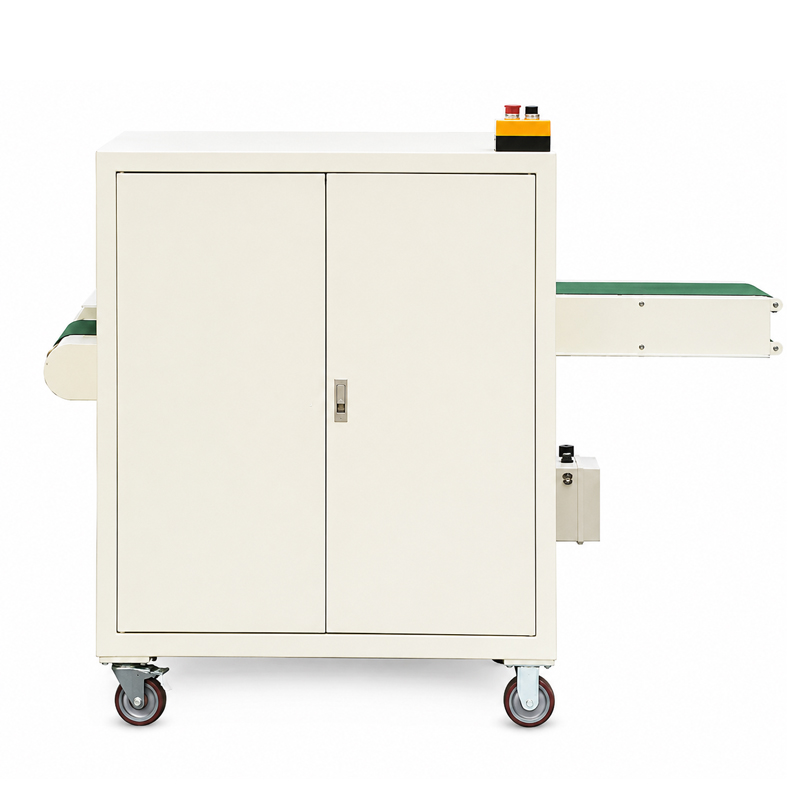
Applicable Products
- Memory foam pillows
- Latex pillows
- Fiber pillows
- Down pillows
Works as a standalone unit, or paired downstream with a compression packing machine to form a full bagging-and-compression line.
Technical Parameters of the Pillow Bagging Machine
| Parameter | Value |
|---|---|
| Production Speed | 6–10 pcs/min |
| Rated Power | 1.5 kW |
| Power Supply | 380 V / 50 Hz |
| Machine Size | 1450 × 850 × 1200 mm |
| Operators Required | 1–2 persons |
| Suitable Materials | Fiber, sponge & latex pillows |
Specifications are subject to continuous improvement. Tell us your daily output and pillow type and we will confirm the exact configuration.
Why You Need Automated Bagging
If you’re still bagging pillows by hand, you’re likely running into one or more of these:
- Labor shortage on the packing line. Hand-bagging is repetitive, low-skill work that’s getting harder to staff, especially during peak season.
- Inconsistent bag placement. Manual insertion varies operator to operator — loose bags, crooked seals, uneven presentation — which shows up as buyer complaints and e-commerce returns.
- Packing becomes the bottleneck. Your foaming and cutting lines can run fast; if bagging can’t keep pace, finished pillows pile up waiting to be packed.
- Rising labor cost per unit. Every pillow bagged by hand carries a labor cost that automation removes.
Core Commercial Value
The numbers below come from real deployments of Yongjia’s pillow packing equipment (bagging machine paired with compression packing machine) in the field — not lab estimates:
- Labor: 1 worker can do the work of 3–4 manual packers (automated bagging + compression line)
- Shipping cost: Compressed pillow volume down 60–75% (full line — bagging machine + downstream compression packing machine)
- Container utilization: 2–3× more pillows loaded per container (full line — same as above)
- Payback: Most customers recover their equipment cost from shipping savings alone within a few months — exact payback period varies by daily output, pillow size, and export lane; no fixed month figure is quoted
Important honesty note: the bagging machine’s own direct contribution is consistent, automated insertion and labor reduction on the bagging step. The 60–75% volume reduction and 2–3× container gain are line-level results that depend on pairing the bagging machine with our compression packing machine downstream — they are not claims about the bagging machine in isolation.
How It Works
Based on the equipment’s cross-section diagram, the process runs in four steps:
- Infeed — The finished pillow is placed on the infeed conveyor belt, which transports it into the machine.
- Guided compression — The conveyor drives the pillow through a tapered guide channel that gradually compresses it to a smaller cross-section.
- Insertion — The narrowed outlet pushes the compressed pillow into a pre-opened plastic bag mounted at the machine’s exit.
- Output — The bagged pillow exits ready for sealing, labeling, or the next step in your packing line.
Equipment Composition
- Infeed conveyor belt — carries the pillow into the machine
- Drive motor — powers the conveyor system
- Tapered guide channel — gradually compresses the pillow to fit the bag
- Narrow outlet — pushes the compressed pillow into the waiting bag
- Pre-opened bag holder — holds the plastic bag in place at the outlet, manually loaded before each run
- Electrical control box — houses the motor controls, sensors, and operation logic
- Emergency stop — safety cutoff, panel-mounted
- Machine cover — enclosed housing for safety and dust protection
- Caster wheels — for easy relocation on the shop floor
Markets We’ve Already Served
This equipment line (pillow bagging + compression packing) has already been delivered to customers in Iran, Pakistan, and Egypt. If you’re sourcing from one of these regions, we can put you in touch with the relevant deployment context on request.
Frequently Asked Questions
What pillow types can this machine bag?
Can this run standalone, or do I need the compression packing machine too?
What’s the cycle time / power draw / machine footprint?
Has this machine been used outside China?
How fast can I get a quote?
Every pillow factory’s line is different — fill type, daily volume, export destination, and whether you’re pairing this with compression packing all change the right configuration. Tell us your daily pillow output, pillow size (before and after compression, if known) and export destination, and we’ll follow up with a tailored recommendation and quote.