
Foam seat production turns liquid polyurethane into a finished seat cushion in three stages: material mixing and dosing, loop pouring and molding on an automated line, and post-processing (trimming, inspection, packing). The whole cycle is built around consistent density and resilience, not just speed. The whole production process is divided into three processes: preparation stage, production stage and post-processing stage.
Mainly check whether the water content and viscosity of polyether meet the requirements. This item is especially important in winter in the north.
Free foam trial production is also carried out for incoming materials, mainly weighing to verify whether they meet the production status requirements.
② Mixing:
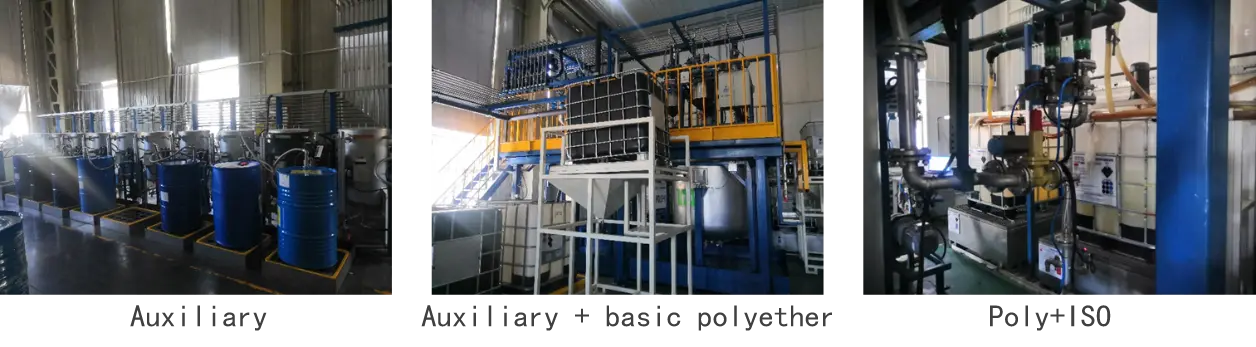
Mixing is carried out according to the established formula, and automatic mixing equipment is currently used. FAW-Volkswagen’s seat foam system is divided into two types: composite material and self-mixing material.
Combination material:) A+B two mixed solutions are mixed directly
Self-batching: mix POLY, that is, basic polyether + POP + additives, and then mix POLY and ISO
Consistent mixing ratios matter because they directly affect measurable foam properties such as compression set and density uniformity; see the flexible foam compression testing standard resources published by the Polyurethane Foam Association for how these properties are tested industry-wide.
2. Production stage – loop production
Generally, loop production is adopted, mainly through several processes such as pouring, forming, demoulding, and mold cleaning, as follows:
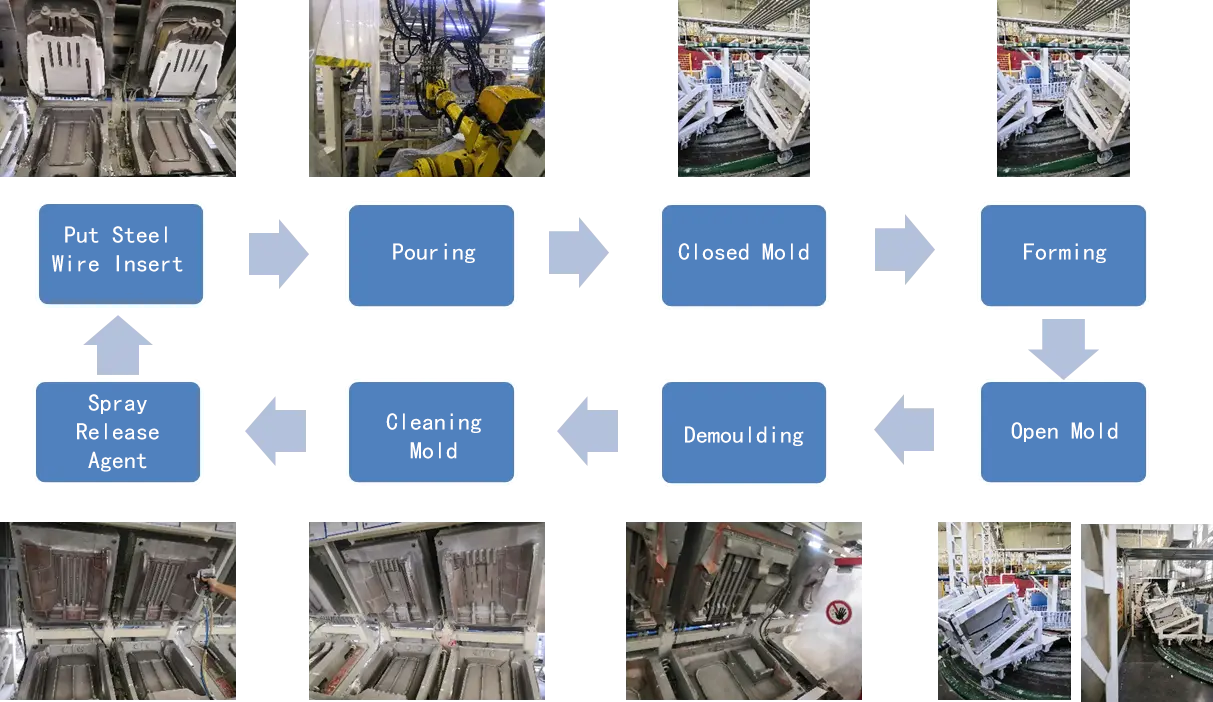
Among them, pouring is the key, which is mainly completed by the pouring manipulator. Different pouring procedures are used according to different positions of the seat foam, that is, foams in different regions are poured, and the process parameters are different (pressure, temperature, formula, foaming density, pouring route, response index).
3. Post-processing stage – including drilling, trimming, coding, repairing, spraying silencer wax, aging and other processes
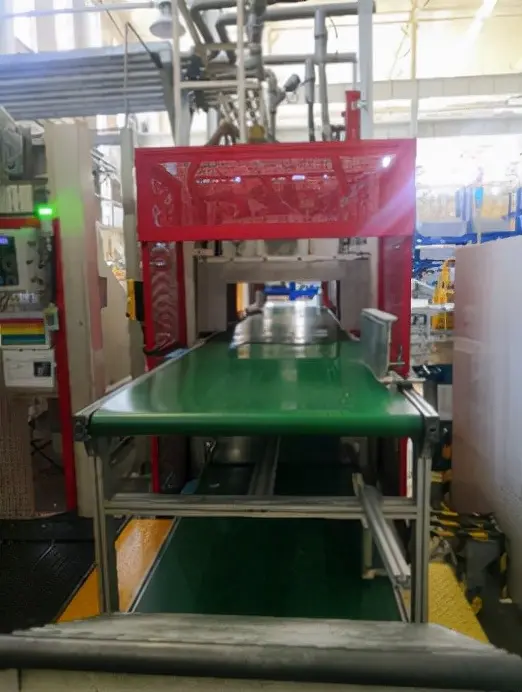
① Hole – The purpose of opening is to prevent product deformation and increase elasticity. Divided into vacuum adsorption type and roller type.
After the foam comes out of the mold, it is necessary to open the cells as soon as possible. The shorter the time, the better, and the longest time should not exceed 50s.
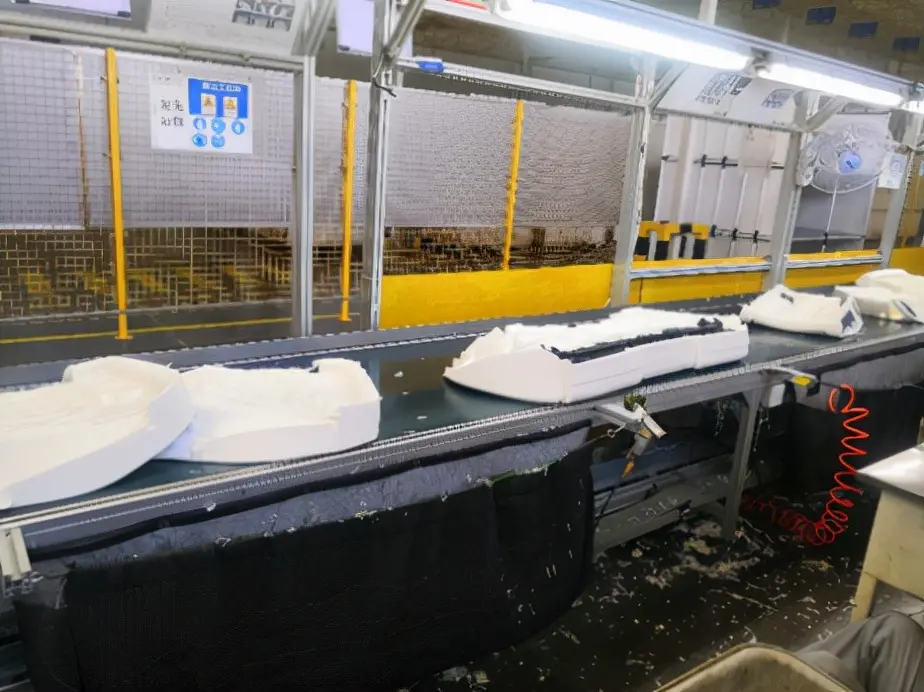
②Edge trimming-foam Due to the process of mold exhaust, some foam flashes will be produced on the edge of the foam, which will affect the appearance when covering the seat and need to be removed by hand.
③ Coding – used to trace the production date and batch of foam.
④Repair – Foam will produce slight quality defects during the production process or demoulding process. Generally, glue is used to repair the defects. However, FAW-Volkswagen stipulates that surface A is not allowed to be repaired, and there are special quality standards to restrict repair operations. .
⑤Spray sound-absorbing wax – the function is to prevent the friction between the foam and the seat frame to generate noise
⑥Aging – After the foam is molded from the mold, the foaming material is generally not fully reacted, and micro-reactions are required. Generally, the foam is suspended in the air with a catenary for 6-12 hours for curing.
opening
Trimming
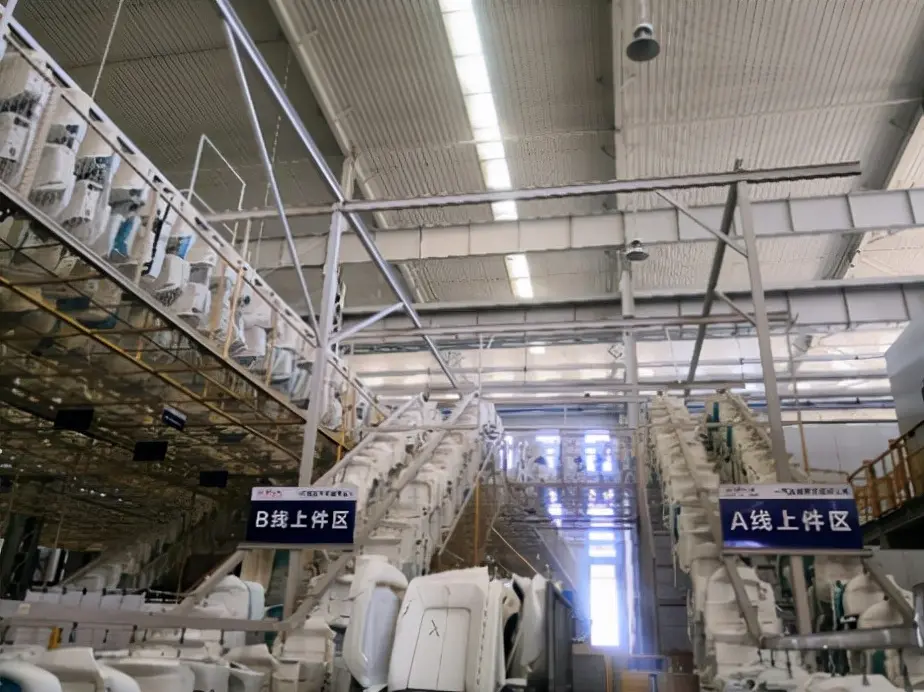
post-ripening
It is precisely because of such a complicated process that Volkswagen’s seat foam has excellent comfort and environmental protection with low odor and low emission.
Buyers who want the equipment side of this process rather than a step-by-step walkthrough can go straight to Yongjia’s complete car seat production line solution.
4. The Foam Seat Production Line – Equipment Behind the Process
Every step above only runs as fast and as consistently as the machinery behind it. Yongjia builds the complete foam seat production line that carries the three stages described above from raw drum to cured cushion.
Mixing stage – foaming machine. The automatic mixing described in stage 1 is handled by a high-pressure or low-pressure PU foaming machine, with metering pumps, temperature-controlled day tanks and a self-cleaning mixing head so that POLY and ISO ratios stay inside the formula window shift after shift.
Production stage – loop line and pouring manipulator. Loop production runs on a carrier-based circulating conveyor: mold carriers index through pouring, curing, demoulding and mold-cleaning stations. The pouring manipulator follows a programmed route for each seat zone, so cushion, backrest and headrest areas get their own pressure, shot weight and pouring path.
Post-processing stage – crushing and finishing stations. Vacuum or roller cell-opening machines, trimming benches, coding units and the aging catenary are integrated at the end of the loop, keeping the sub-50-second cell-opening window achievable in real production.
Yongjia supplies this as a turnkey line: low, medium and high takt configurations, mold station counts sized to your seat models and output target, plus molds, raw material dosing and installation and commissioning on site. Existing plants can also add a single foaming machine or manipulator to an installed line. See the full car seat foaming production line package for line layouts, molds and equipment options.
The Foam Seat Production Line at a Glance
For reference, this is how the three process stages map to equipment and to the quality risk each stage carries – independent background on these foam properties is also available from the polyurethane foam industry resource published by the Polyurethane Foam Association.
| Process Stage | Core Equipment | Common Quality Risk |
|---|---|---|
| Raw material dosing & mixing | High/low-pressure foaming machine | Ratio drift causes uneven density |
| Loop pouring & molding | Loop line carriers + pouring manipulator | Uneven pouring causes local collapse or short shots |
| Demoulding & post-processing | Cell-opening machine, trimming station | Insufficient cell-opening reduces resilience and breathability |
Each stage above is available as a standalone unit as well as part of the full line – see the automotive seat foam making machine for the mixing and pouring side, and the car seat molds for the demoulding and post-processing side.
Contact us to get prices up to 30% lower than Europe on a complete foam seat production line. Request a quotation.
FAQ
What causes uneven density in foam seat production?
Inconsistent raw material ratio or mixing temperature is the most common cause; it’s usually fixed by recalibrating the dosing unit rather than the mold.
How long does one foam seat production cycle take?
Cycle time depends on the seat’s mass, mold count, and cure profile, so it varies by product – buyers should ask for a cycle time test on their specific mold before comparing lines.