
A Brazilian PU foam products manufacturer asked us for a quotation in 2022, then went silent for two years. In 2026 it ordered a foaming machine, a pouring robot and, soon after, a three-component mixing head. This week, a follow-on order is clearing export customs. Here is what happened in between — and why the deal came down to one technical question on a video call.
Update, late August 2026
Two things are happening with this client as we publish:
- The follow-on order — a heating system for the moulds on the client’s pillow carousel — is packed and clearing export customs in China this week.
- Our account manager Queenie Chen is in São Paulo for the Feiplar / Feipur trade-fair week, where the client is also present.
Both facts are reported by our sales team; the case below is told from the original chat records and the client’s own messages.
Some deals are not won on price. They are won on still being there.
In 2022, a Brazilian PU products manufacturer sent us an inquiry. We quoted, we followed up — and the client went almost completely silent for two full years, until it re-engaged in 2024.
To many suppliers a lead like that is dead. Our account manager, Queenie Chen, read it differently. The client had asked for several rounds of proposals; it was not without a need, it was waiting for its own end-project to firm up (the project was ultimately for a U.S. customer). So she kept the client on her key-account list and never crossed it off.
One call a month, timed for the client’s daytime, not ours
Queenie did not chase the client with a stream of messages. She chose a slower, more honest method: one phone call a month, placed late at night China time — because that is working hours in Brazil.
Whether the client answered or not, she called. Over four years the calls actually connected three times. Three was enough to keep one fact alive in the client’s mind: there is a Chinese supplier who has never gone away.
There were setbacks along the way. The client shipped several of its own samples to us for a proposal, then went quiet again once they arrived. The cross-border call quality was patchy and would cut out after a sentence or two. When it dropped, she called back.
The turning point: in the days it was deciding, the client saw us again
In 2026 the client began seriously sourcing an equipment supplier, with a firm deadline of its own. In the very days it was comparing and deciding, it came across us again — the same company, the same person. Four years of impressions, relit in a moment.
The client asked for a video call itself.
One technical question decided the deal
On the call the client’s decision-maker was a classic engineer: few words, mostly listening. Then he put one question on the table — how would the robot’s signal integration work?
That is our home turf. We gave a solution on the spot, asked him to confirm whether he wanted chip-based or encoder-based integration, and explained the difference and where each fits. For a buyer who trusts technical substance over small talk, that immediate, specific answer did more than any pitch.
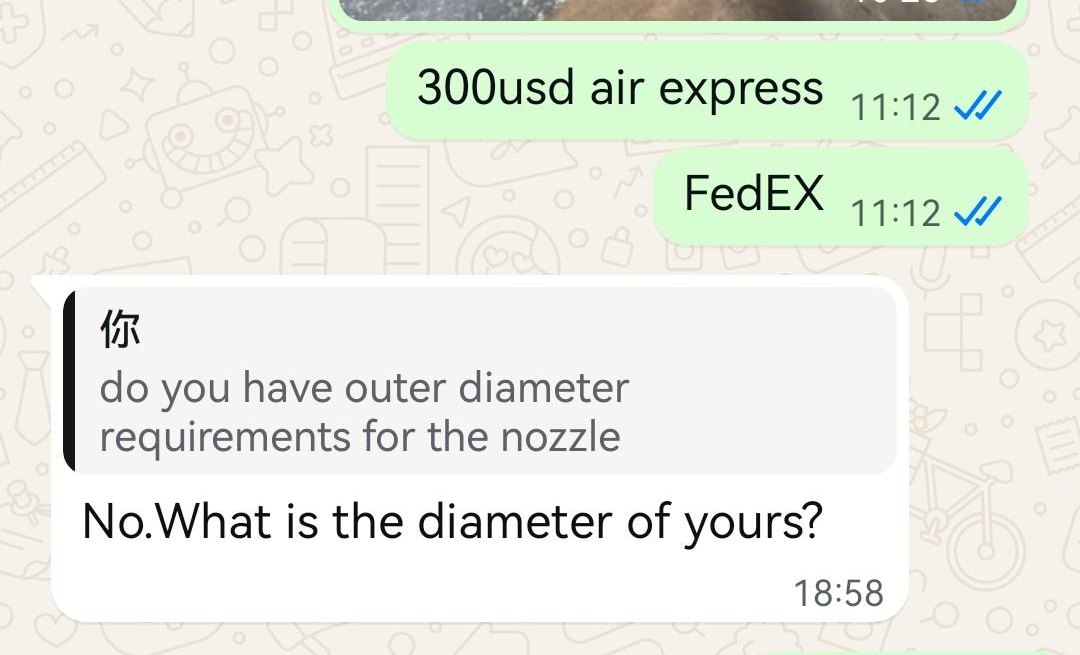
As the call ended he said: "Give me a week." A week later the order came in — the foaming machine and the pouring robot, and later an added three-component mixing head.
Closing the deal was the начинать, not the end
After the equipment was in place the client did not disappear. It came back on its own with more technical questions and new needs: replacing the heating system for the moulds on its carousel, upgrades for other machines it runs. That mould-heating order is the one clearing customs this week.
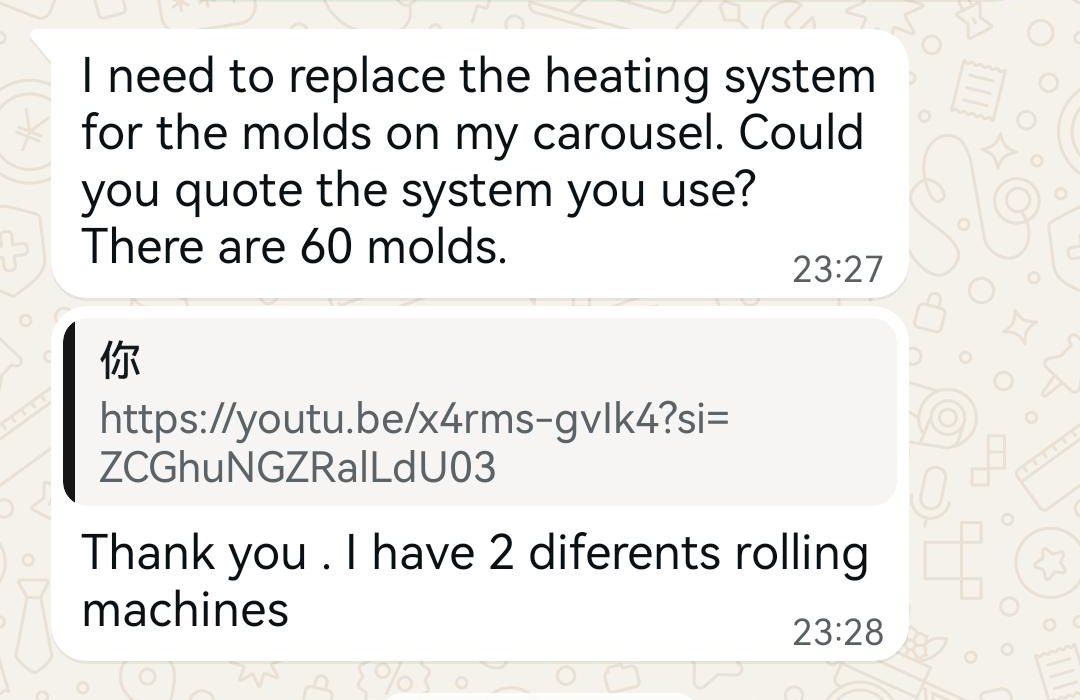
A client that once went silent for two years now treats us as the first call it makes when something comes up.
What this case says about buying a PU foaming line
- Long-cycle projects need a supplier who stays reachable. If your line depends on an end-customer’s schedule, choose a supplier who will still remember your project two years later, not only the one who quotes fastest today.
- Robot integration is where many foaming-line deals are actually decided. Chip-based and encoder-based signal integration suit different cells; a supplier should be able to explain which fits yours on the first call.
- Follow-on needs come from the same line. Mould heating systems, mixing-head upgrades and additional machines tend to follow the first order — a reason to pick a supplier who supports the whole line, not one machine.
If you are running a slow, long-cycle PU project in Brazil or anywhere in Latin America and want a supplier who is still there when you are ready, talk to Queenie Chen (Account Manager, Yongjia Polyurethane): queenie@yongjiapu.com. Portuguese and Spanish-speaking buyers welcome; the time difference is our problem, not yours.
Case note: the client’s company name, people, equipment brands and contract figures are withheld in this anonymized version at the client’s request. Chat screenshots are genuine and redacted. Timeline facts are customer-reported / sales-reported; no production KPIs are claimed for this project because none have been measured yet.